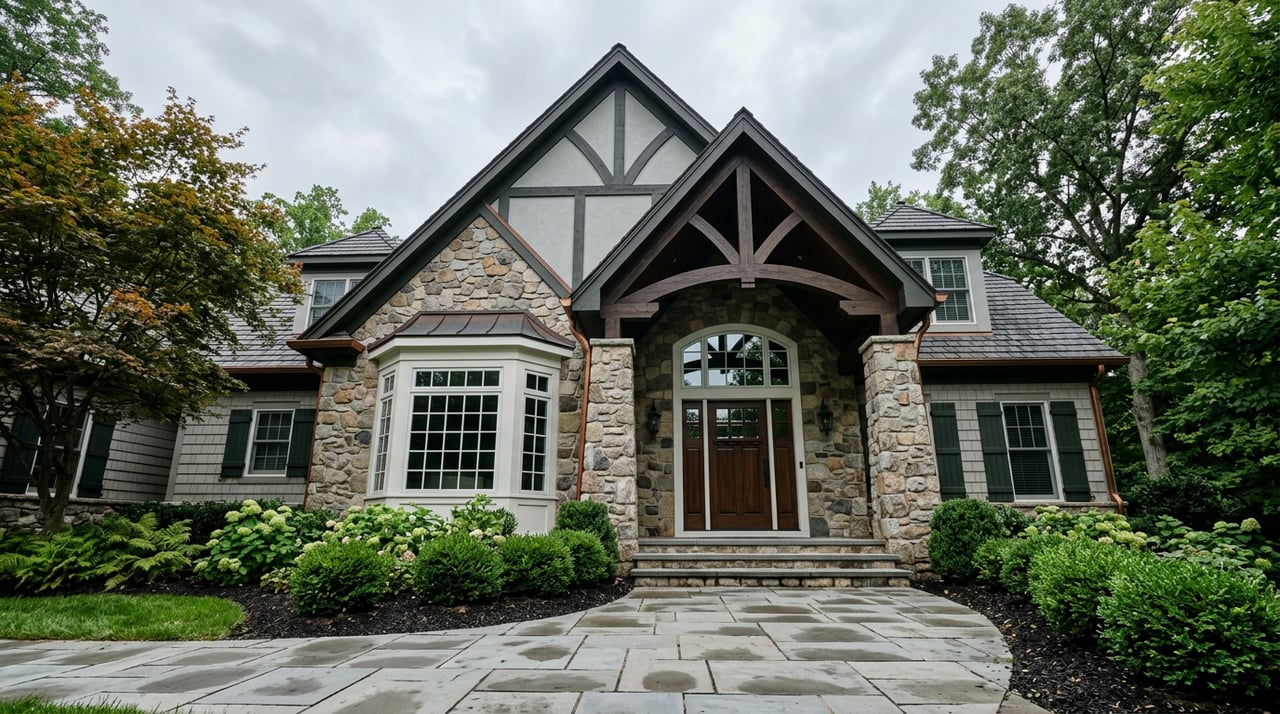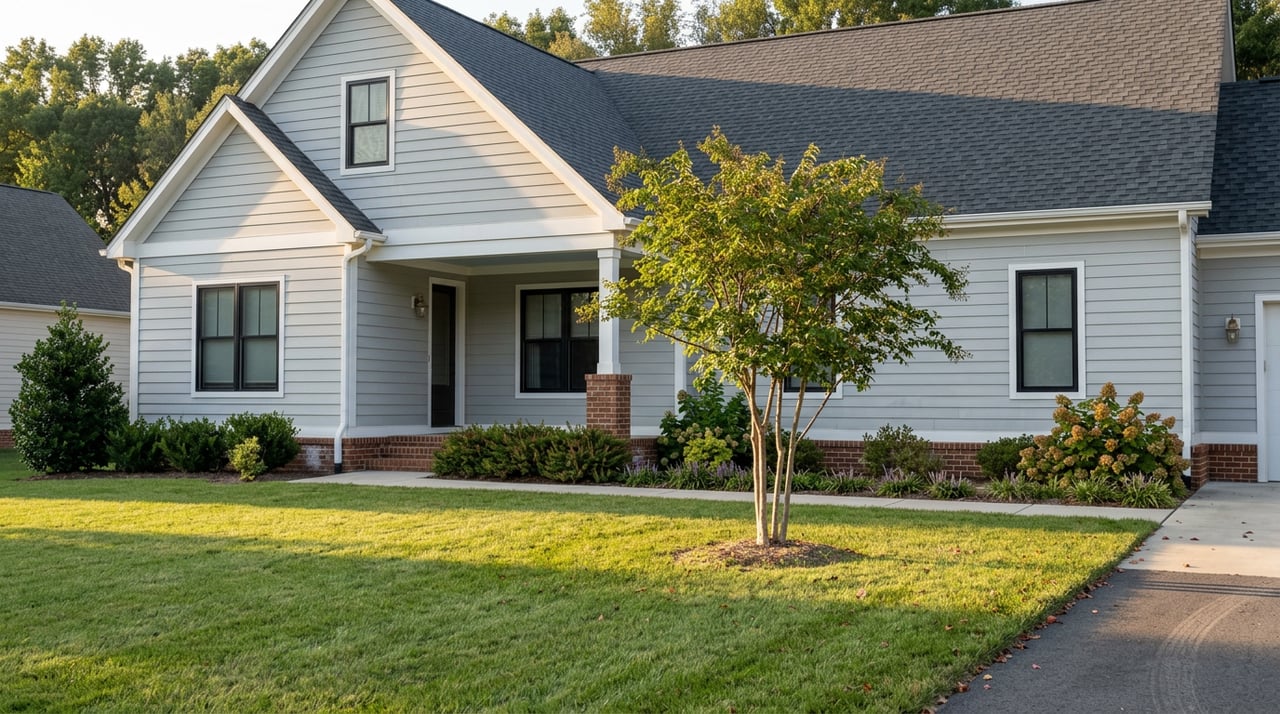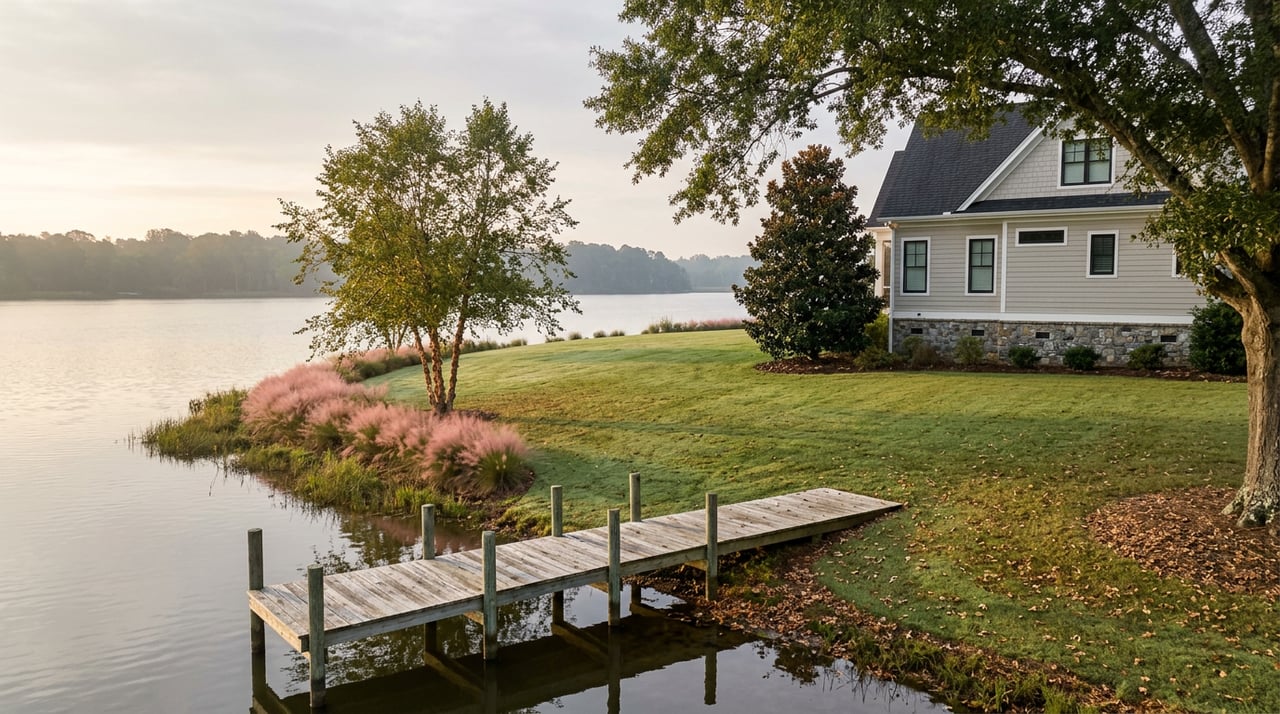
A buyer touring Denver's shoreline this fall will hear the word "waterfront" attached to almost everything within a mile of Lake Norman. Some of those homes have a private dock with a boat lift. Some have a walk-to slip a hundred yards down a shared path. Some have neither, and the dock the listing photos show may not legally belong to the house at all once the sale closes.
That gap between what a listing implies and what a buyer actually owns is not a marketing problem. It is a function of how Lake Norman itself is owned. Duke Energy built the lake, holds a federal license to operate it, and controls everything that touches the water below a fixed elevation line. A home's property line on paper is not the same as its property line at the shore. Understanding that distinction, and a rule change that took effect this year, matters more to your total cost of lake access than the county your closing documents list.
The Line Under the Dock
Lake Norman is a reservoir, not a natural lake. Duke Energy created it for hydroelectric power and operates it under a license from the Federal Energy Regulatory Commission. That license gives Duke authority over the shoreline and lakebed below what is known as full pond elevation, the water level when the lake sits at 100 percent capacity. A residential deed on Lake Norman effectively ends at that line. Everything below it, including a dock, a boat lift, a seawall, or riprap stabilization, sits on land Duke controls rather than land the homeowner owns outright.
That means a dock is never simply part of the house the way a garage or a deck is. It is a separately permitted structure, tied to a Duke Energy shoreline authorization, and that authorization does not move with the deed automatically. If the seller never transferred the dock permit into their own name, or if the structure was modified beyond what the original permit allowed, a buyer can close on the home and discover the dock is not legally theirs to keep, use, or insure the way they assumed.
This is why closing attorneys on Lake Norman transactions increasingly ask for a copy of the Duke Energy shoreline permit and the transfer confirmation letter before they will schedule a closing. The transfer process itself is commonly cited as taking up to 45 days, which is longer than most standard due diligence periods, so a buyer who waits until the final week of a contract to ask the question has already lost the leverage to negotiate around a problem if one turns up.
The Rule That Just Changed the Math for Land Buyers
For buyers looking at vacant lots rather than finished homes, there is a more consequential shift, and it already took effect this year. Duke Energy's shoreline permitting page confirms that, since July 1, 2026, the company no longer reviews private dock applications on lots where no home has been constructed. The change applies across all Duke Energy lakes, not just Lake Norman, and it does not apply to shoreline stabilization work, only to new private dock permits.
Before this year, a buyer could purchase a raw waterfront lot in Denver with the intention of securing dock rights first and building later, treating the permit as a box to check whenever it was convenient. That sequence no longer works. A home now has to exist on the parcel before Duke will even begin reviewing a dock application. For anyone assembling land in Denver's west-shore communities as a build-later investment, this reorders the entire project timeline. The dock is no longer a pre-construction formality. It is a post-construction step, which means construction financing, build timeline, and dock planning all have to be sequenced with that in mind from the start.
It also means a vacant lot advertised with "dock potential" is describing a possibility that now depends entirely on getting a home built first, not a right that comes with the land itself.
What This Looks Like Across Denver's Shoreline
Denver's lake-oriented neighborhoods each solve the access question differently, and the differences are structural, not cosmetic.
| Community | Lake Access Model | What You're Actually Buying |
|---|---|---|
| Sailview | Deeded walk-to boat slips for many homes, plus a clubhouse, pool, tennis, and pickleball | A permitted slip tied to a specific home, not a guarantee that every home in the community has one |
| Pebble Bay | Gated community with large wooded lots and shared access including a ramp, day slips, and limited boat storage | Community-managed access rather than an individual Duke permit to track |
| Westport | Golf and swim/tennis amenities anchored near Safe Harbor Westport marina | Access through a membership or marina relationship, separate from Duke's private dock permitting system |
| Harbor Oaks | Gated, large wooded lots with a mix of private docks and septic systems | An individual Duke shoreline permit you must confirm is current, compliant, and transferable |
| Governor's Island | A private enclave of roughly 42 home sites with main-channel shoreline | Scarcity as much as access. Very little turns over, and most lots are already built out |
| Trilogy Lake Norman | Age-restricted, resort-style community with managed boat access | Lake lifestyle without ever owning or permitting a dock yourself |
The differences matter beyond amenities. A buyer at Harbor Oaks is taking on an individual regulatory relationship with Duke Energy, including responsibility for permit compliance at resale. A buyer at Trilogy is opting out of that relationship entirely in exchange for a managed system. A buyer at Sailview is somewhere in between, dependent on whether their specific home carries a deeded slip or not. None of these is the wrong choice. They are different transactions wearing the same word, "waterfront."
Reading the Median Correctly
Over the three months ending June 2026, Denver's median sale price ran near $565,000, up close to 13 percent from the same period a year earlier by one widely used measure. A separate home value index put Denver's average around $555,664 as of the end of June 2026, essentially flat over the same year. The two don't agree because one tracks closed sale prices and the other tracks estimated value, and that gap is a useful reminder on its own: even the baseline number depends on how you measure it, before you've asked a single question about what's below the waterline.
Direct waterfront closings tell a sharper story. A verified count of Lake Norman waterfront sales compiled in August 2026 found only four closed waterfront sales in Denver during May, with a median price of $1.86 million, a small enough sample that it should be read as a signal rather than a settled average. The same count put Denver's real entry point into waterfront living, in the form of an attached waterfront townhome, at roughly $560,000, almost identical to the off-water citywide median. That gap between $560,000 and $1.86 million is the premium buyers pay for shoreline and dock access as a category. It is not a guarantee that any individual listing at that price point comes with a fully compliant, transferable permit. A buyer paying seven figures for main-channel frontage still has to verify the same permit history as a buyer paying $560,000 for a townhome with deeded access three streets back from the shore. Even at the very top of the market, that verification doesn't disappear. When a Norman Estates estate in Denver listed for $18.5 million this spring, the marketing leaned on an infinity-edge pool, a private dock, and a pickleball court as headline features, the same category of amenity a buyer at any price point still has to confirm is properly permitted rather than simply photographed.
County tax rates, by contrast, turn out to be a smaller factor than most buyers assume when comparing Denver to south-shore alternatives. Lincoln County's adopted FY2026 rate is $0.499 per $100 of assessed value, close to Iredell County's rate near $0.50 and Mecklenburg County's FY2026 rate of 49.27 cents. The differences are marginal once municipal and fire district assessments are added on top. The line item that actually swings your long-term cost of lake living is not which county collects your property tax. It is whether the dock permit attached to the home you're buying is clean, current, and correctly transferred into your name at closing.
What to Verify Before You Write an Offer
A few questions, asked before an offer rather than during due diligence, do most of the protective work:
Ask the seller for the Duke Energy shoreline permit and, if applicable, the transfer confirmation letter showing the dock is registered in their name. If they cannot produce one, treat that as material information rather than a minor gap.
Confirm the parcel's shoreline classification directly with Duke Energy before assuming a covered boathouse, a second slip, or a larger footprint would be allowed if you wanted to expand later. Classifications vary lot to lot along the same cove.
If you're buying vacant land with the intention of building and adding a dock, plan for the home to be substantially built before a dock application will even be reviewed under the July 2026 rule, and build that sequencing into your construction timeline rather than treating the dock as a parallel task.
A Short FAQ
Does a home listed as waterfront always come with a legal, usable dock? Not necessarily. The listing describes physical proximity to the water. Whether a dock is legally permitted, currently compliant, and transferable to a new owner is a separate question that has to be verified against Duke Energy's records, not assumed from the listing photos.
Can I still buy a vacant Lake Norman lot and add a dock later? Yes, but the sequence has changed. Since July 1, 2026, Duke Energy no longer reviews a new private dock application on a lot without a home already constructed. Land buyers now need to plan for the home to come first and the dock application to follow.
How long does a dock permit transfer typically take at closing? The process is commonly cited as taking up to 45 days once submitted, which is why many closing attorneys ask that it be initiated well before closing rather than left as a post-closing task.
Sorting through which Denver community matches how you actually want to use the lake, and confirming the paperwork behind any dock you're counting on, is exactly the kind of groundwork Sheena Shaw and The Hometown Team walk buyers through before an offer goes in. Schedule a consultation to talk through the shoreline, the permit history, and which Denver neighborhood actually fits how you plan to live on the water.